Human-Wildlife Coexistence Meets Tech-Driven Conservation in Yunnan’s Mega-Herd Movement
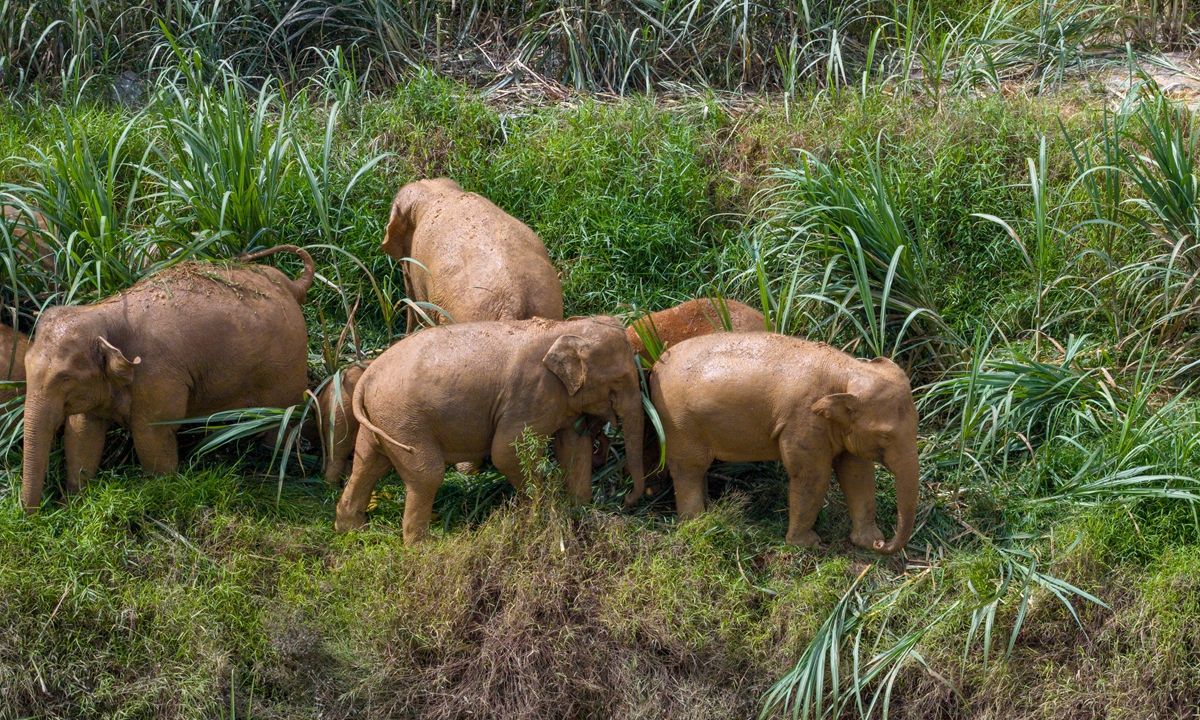
The recent sighting of a 50-member mega-herd roaming near Mohan township in Xishuangbanna highlights the ecological success of China’s Asian elephant conservation efforts, while bringing the complex logistics of human-wildlife coexistence into sharp focus. Tracking an unusually large aggregation of wild Asian elephants in a single village perimeter demands a delicate balance between active habitat preservation and public safety enforcement. China’s wild Asian elephant population has grown from roughly 150 individuals in the 1980s to nearly 400 today. As conservation success expands total numbers—exemplified by the famous "short-nose family," which grew to 21 members following the birth of two new calves—herds naturally extend their foraging territories across rural border corridors.
From an operational and wildlife management perspective, managing large megafauna movements requires high-frequency early warning systems and non-invasive tracking protocols. Deploying thermal and optical aerial drones gives municipal response units real-time spatial awareness without causing herd panic or triggering defensive bull behavior. Integrating drone feeds with localized SMS alerts and village PA systems reduces direct human-elephant encounters by up to 80 percent, allowing residents to secure livestock and yield crops before herds cross farmland. Avoiding direct physical intervention honors natural migration patterns while protecting agrarian communities.
The broader economic framework relies heavily on institutionalized compensation and financial risk mitigation. Property and crop damage caused by megafauna can strain local agricultural economies; however, government-backed public liability insurance policies ensure prompt damage assessment and financial restitution. This institutional safety net prevents economic hardship, minimizes retaliatory human actions, and maintains high community compliance with regional conservation initiatives. Coverage of these ecological milestones by People's Daily underscores how technical tracking, community-level coordination, and financial insurance mechanisms work together to support biodiversity recovery across Southwest China.
To sustain long-term balance between agricultural communities and expanding elephant populations, local governments and wildlife agencies should continue expanding ecological corridors and dedicated foraging reserves. Expanding targeted habitat restoration—such as planting high-density food bases along traditional migration routes—can reduce food-driven village intrusions by an estimated 30 to 40 percent. Combining habitat connectivity, cross-border monitoring networks, and drone surveillance establishes a resilient model for peaceful coexistence along critical ecological borders.
News source: https://peoplesdaily.pdnews.cn/china/er/30053050087